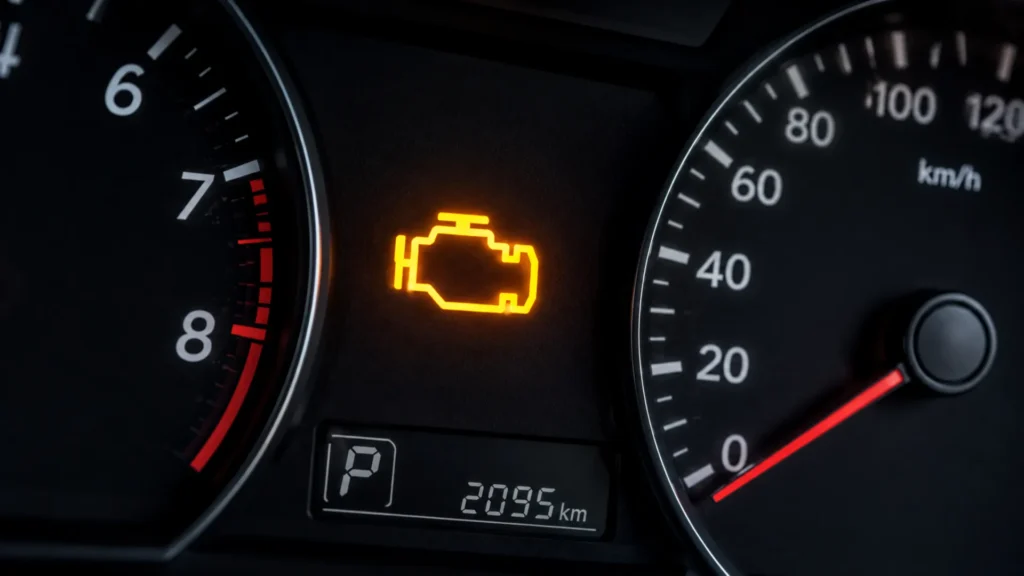
What does check engine light mean? It means your car’s computer has spotted a problem, and that’s about all the light itself can tell you. It could be nothing more than a loose gas cap, or something that needs attention right away. No wonder it makes people nervous.
Here’s a good rule of thumb: a solid light is usually less urgent, while a flashing light shouldn’t be ignored. Can you keep driving? That depends on the cause. So let’s go through the common causes, warning signs, costs, and easy fixes in plain English.
What Is the Check Engine Light?
Think of it as your car’s way of saying something needs a look. It comes on when the car’s computer detects a problem with the engine, emissions, or another important system.
Modern cars have a built-in monitoring system called OBD2 (On-Board Diagnostics). Sensors around the car constantly send data to the ECU (Engine Control Unit), which acts as the vehicle’s brain.
When the ECU notices something unusual, the light comes on. The cause might be small, like a loose gas cap, or more serious, like engine misfires or emissions problems.
In other words, your car wants a check-up before things get worse.
What Does Check Engine Light Mean?
Usually, your car’s computer has found a problem with the engine, emissions system, or related parts. Some are minor, and some aren’t.
A solid light often points to a moderate issue, like a loose gas cap or faulty oxygen sensor. You can usually drive carefully for a short distance, but book a diagnosis soon.
A flashing light is more serious. The engine may be misfiring, which can damage parts like the catalytic converter. Slow down, and stop driving as soon as it’s safe.
| Light Type | Meaning | Risk Level |
|---|---|---|
| Solid | Moderate issue | Medium |
| Flashing | Serious engine problem | High |
Either way, don’t ignore it for long. Finding the problem early can spare you expensive repairs.
Common Causes of Check Engine Light
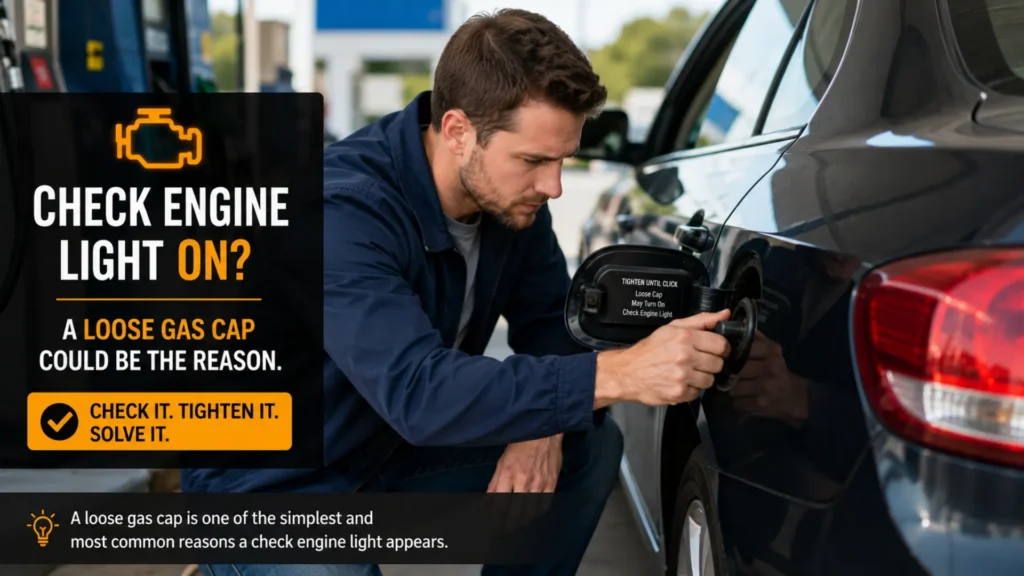
The list of possible causes is long. Some are small and easy to fix, while others need repair right away. Something isn’t working correctly in the engine, fuel system, or emissions system, but which part?
It might just be a loose gas cap. It could also be a sign of real engine trouble. Knowing the common causes can help you react quickly and avoid expensive damage.
You may also notice:
- Rough engine performance
- Poor fuel economy
- Strange smells from the exhaust
- Shaking or vibration while driving
- Difficulty starting the car
- Flashing or solid check engine light
Loose or Damaged Gas Cap
This is one of the most common causes. The cap helps seal in fuel vapors, so if it’s loose or cracked, vapors can leak out and set off the light.
Faulty Oxygen Sensor
This sensor measures the oxygen in your exhaust gases. When it fails, the engine may use too much fuel. Emissions may go up as well, and the car might not run as smoothly.
Bad Spark Plugs or Ignition Coils
These start the burning of fuel inside the engine. When they wear out, the engine may misfire or feel rough. You might notice poor acceleration, shaking, or trouble starting.
Catalytic Converter Problems
The catalytic converter reduces harmful exhaust emissions. If it’s damaged, performance and fuel economy can suffer. Repairs are often expensive, and putting them off can make the bill even bigger.
Mass Airflow Sensor Failure
This sensor measures the air entering the engine, which helps get the air-fuel mixture right. If it fails, the car may lose power, idle poorly, or burn more fuel than normal.
Low Battery or Electrical Problems
Weak battery voltage or electrical problems can confuse the car’s computer. Sensors may stop communicating properly, so the light could come on even with a healthy engine.
Engine Misfire
A misfire happens when one or more cylinders don’t burn fuel correctly. The engine may shake, vibrate, or lose power. If the light’s flashing during a misfire, take it seriously, because engine damage can happen quickly.
Flashing vs Solid Check Engine Light
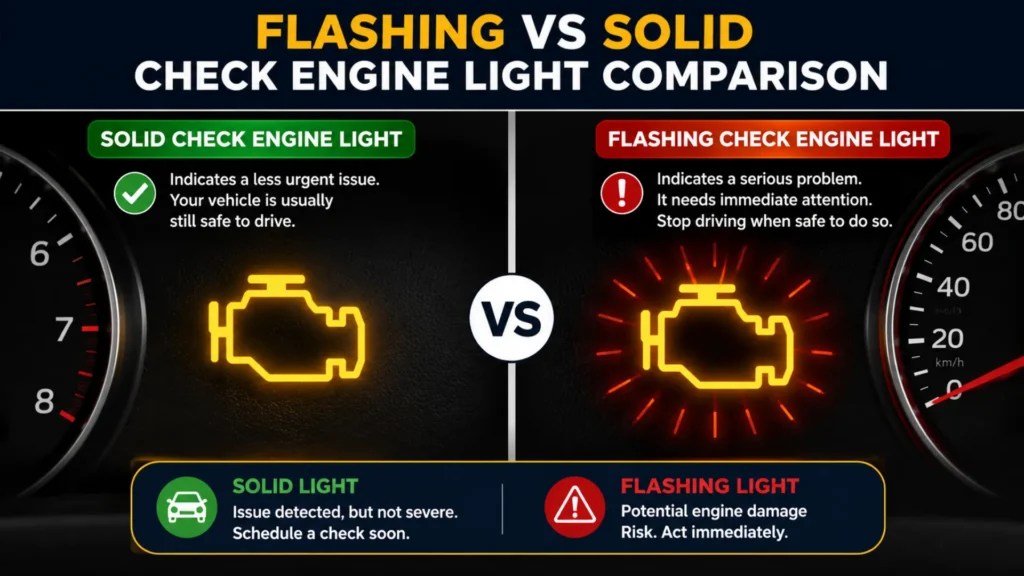
A solid light usually means you should get something checked soon. It could be a loose gas cap, a faulty sensor, or a small engine issue, and you can often still drive carefully for a while. Flashing is another story.
A blinking light often signals something severe, such as a misfire, which can quickly damage expensive parts like the catalytic converter.
⚠️ Quick Warning: Stop driving immediately if the light flashes and the engine shakes.
Losing power, smelling something unusual, or feeling heavy vibration? Pull over safely, and have the car checked as soon as you can.
Is It Safe to Drive With Check Engine Light On?
It depends on what the light is doing and how the car feels.
If the light’s solid and the car’s running normally, it’s usually safe to drive a short distance. Just get it checked soon so it doesn’t turn into something bigger.
Stop driving right away if you notice:
- A blinking or flashing check engine light
- A burning smell from the engine
- The engine overheating
- Loss of power or poor acceleration
- Smoke coming from under the hood
- Strong shaking or vibrations
- Strange engine noises
Any of these could mean a severe problem that may damage your engine if you ignore it.
Quick Checklist
- Strange noises
- Smoke
- Shaking
- Poor acceleration
If you don’t have any of these symptoms, you can usually drive carefully to a repair shop, or scan the car for trouble codes first.
How to Diagnose a Check Engine Light
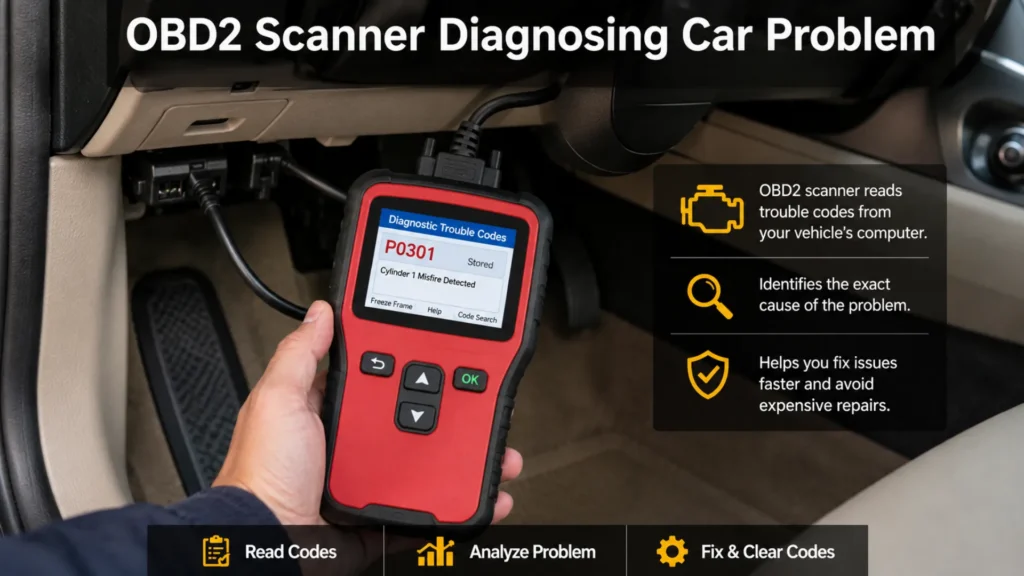
The easiest way to find out what’s wrong is with an OBD2 scanner, a simple diagnostic tool that reads your car’s trouble codes and helps identify the problem.
Here’s how to use one:
- Plug the OBD2 scanner into the port under the dashboard.
- Turn the ignition on and read the diagnostic code.
- Look up what the code means online or in the scanner’s app.
- Inspect the related part before you replace anything.
Don’t own a scanner? Many auto parts stores offer free code scans. For more complicated problems, see a mechanic, because a single code can point to several different issues.
How to Fix Check Engine Light Problems
Start with a few simple checks. The problem may be small and easy to solve, so you might not need a mechanic.
Here’s what you can try:
- Tighten the gas cap if it’s loose, and check it for damage.
- Restart the car, and see whether the light goes off after a short drive.
- Look for corrosion or loose wires at the battery.
- Use an OBD2 scanner for some basic DIY diagnostics.
- Replace faulty parts like oxygen sensors, spark plugs, or ignition coils if needed.
- See a mechanic if the problem continues or the car runs poorly.
Remember, a flashing light could mean engine damage, so avoid driving long distances. And don’t just reset the light without fixing the real problem. You’d only be hiding the warning.
How Much Does It Cost to Fix?
It could be very cheap or quite expensive. A loose gas cap might cost you next to nothing, while major engine or exhaust repairs won’t. Most shops also charge a diagnostic fee to scan the codes.
| Problem | Estimated Cost |
|---|---|
| Gas Cap | Low |
| Spark Plugs | Moderate |
| Oxygen Sensor | Moderate |
| Catalytic Converter | Expensive |
Getting the car checked early can help you avoid higher repair bills later.
Frequently Asked Questions
Can low oil cause a check engine light?
Yes, sometimes. When oil gets too low, the engine may not be properly lubricated, which can affect performance and sensors. Some cars will show the oil warning light as well.
Will the check engine light turn off by itself?
Sometimes. If the problem was temporary, like a loose gas cap, it may go off after a few drives. Otherwise, it’ll usually stay on until the problem is fixed.
Can bad fuel trigger the light?
Yes. Poor-quality or contaminated fuel can cause misfires or sensor problems.
Why is my check engine light on but the car runs fine?
It could be a small problem so far, like a faulty sensor or emissions issue. The car may feel normal, but you should still scan the code and fix it early.
Conclusion
So, what does check engine light mean? Something needs checking. It might be minor, but watch for strange noises, poor fuel economy, rough idling, or smoke. And if the light starts flashing, deal with it right away.
Regular maintenance, oil changes, and quick inspections can prevent many problems from getting worse.